Semantische Tektonik
Wettbewerbsbeitrag „Reinventing the Virtual City“ (1. Preis), Shrinking Cities, 2007 · deutsch und englisch ·
PDFThe text below is reproduced in German. An English version is included in the PDF.
Der Wettbewerb 2.0 – Reinventing the Virtual City ruft dazu auf, die virtuelle Stadt neu zu denken, neue Handlungsansätze zu finden, um die Schrumpfung von Second Life (SL) positiv zu gestalten. In der Ausschreibung wird von zwei Prämissen ausgegangen, die es zumindest in Frage zu stellen gilt.
Zuerst einmal ist es wichtig festzustellen, dass SL überhaupt nicht schrumpft, sondern weiter wächst, wenn auch die Wachstumskurve inzwischen nicht mehr exponentiell, sondern eher linear verläuft. Während die astronomische Zahl der jemals erstellten Avatare in SL, die so gern von den landläufigen Medien reproduziert wird, getrost vernachlässigt werden kann, so ist doch die Anzahl der concurrent user, also derjenigen, die zu einem gegebenen Zeitpunkt gleichzeitig die Plattform nutzen, eine wichtige Größe, die weiter anwächst. Diese Zahl liegt derzeit bei etwa 45.000 und ist damit doppelt so hoch wie zu Zeiten des unreflektierten medialen Hypes im Frühjahr 2007.
Dennoch besteht kein Zweifel darüber, dass sich die synthetische Welt zu weiten Teilen verlassen anfühlt. Offenbar finden die Nutzer der Plattform in ihrem Zweitleben nicht recht zueinander, sondern sind getrennt von einander, durch raumgreifenden, architektonischen Datenmüll. Denn anders als in der uns gewohnten physischen Welt, ist in SL Land kein knappes Gut. Der Umfang der Landmasse, und damit auch der bebauten Fläche, wächst schneller als die Bevölkerung. Das liegt auch daran, dass viele Einwohner, aber auch Firmen, in einer kurzen Phase anfänglicher Euphorie große Gebäude errichten, dann aber niemals zurückkehren. Die Bevölkerung unterliegt einer starken Fluktuation von Zu- und Abwanderung, während die Zahl der Behausungen eigentlich nur zunimmt. Es gibt also keine Knappheit an Einwohnern, sondern einen Überschuss an zersiedeltem Raum. Dieser Umstand wird vor allem dadurch zum Problem, dass Linden Labs Welt bar jeder Struktur ist, die eine sinnvolle und intuitive Orientierung im Dschungel Potemkinscher Fassaden ermöglichen könnte. Bisher haben wir es eher mit einer gefühlten, als mit einer echten Entvölkerung zu tun. Diese schmälert aber den Spielspaß dermaßen, dass es wenig überraschen würde, wenn auf das exponentielle Wachstum tatsächlich bald der exponentielle Exodus folgen sollte. Konzepte für dieses Szenario sind also dringend notwendig.
Bei der zweiten Prämisse handelt es sich um die Ausgangsposition, dass Second Life eine Stadt ist. In der Tat weisen die einzelnen Orte innerhalb der simulierten Landfläche viele Gemeinsamkeiten mit unseren Städten der physischen Welt auf. Zumindest sind die einzelnen digitalen Baumeister sehr bemüht, die von ihnen verwendeten Metaphern dem Haus- bzw. Siedlungsbau zu entlehnen. Neben einer unüberschaubaren Anzahl von Shopping-Centern gibt es allein den Berliner Alexanderplatz in vierfacher Ausführung. Nichtsdestotrotz ist es fraglich, ob die entstandenen Bauten, und vor allem die Welt als Ganzes, als ein urbaner Raum verstanden werden kann, da zu weiten Teilen keinerlei Zusammenhang, keinerlei echte Infrastruktur besteht. Diese ist jedoch wesensbildend für unsere bisherige Definition von Stadt.
Es handelt sich bei SL viel eher um einen Inselstaat, bei dem die einzelnen Orte in keiner Weise eine Verbindung miteinander eingehen, sondern unabhängig von einander in einem maritimen Nirgendwo dümpeln, ohne Sichtkontakt zum nächsten Eiland. Aber auch auf dem Mainland, dem Festland, auf dem sich alle diejenigen finden, die sich keine eigene Insel leisten können, herrscht totales Chaos. Dort, wo man als Nutzer ein Netz von Wegen, ein sinnvolles Nebeneinander erwarten könnte, herrscht ein krudes Durcheinander von urbanem Wildwuchs, ohne Zentrum oder Peripherie, das in der Anmutung irgendwo zwischen Slum und Kleingartensiedlung changiert, die Bezeichnung Stadt bisher aber kaum verdient. Da der Grund und Boden in SL vollständig in privater Hand und jeder einzelne Ort auch auf dem Luftwege oder per Teleport zu erreichen ist, ist keiner der Residents bereit, Teile seines Landes für öffentliche Straßen oder Wege herzugeben. Nachbarschaftliche Kooperation ist bestenfalls punktuell zu beobachten, von einem Netzwerk kann nicht die Rede sein, und an einem Planungsgremium ist verständlicher Weise niemand interessiert. Für jeden einzelnen Bewohner ist es deshalb nur rational und bequem, sich stattdessen lieber in mit Phototapete beklebten Sichtschutzwänden einzumauern, und die Nachbarn auszublenden. Für die virtuelle Welt als Ganzes, zumindest für das Mainland, führt dieses an sich nachvollziehbare Verhalten allerdings zum städtebaulichen Super-Gau. Da die galoppierende Verslumung für Linden Lab inzwischen existenzbedrohende Ausmaße angenommen hat und es keine Lösung sein kann, die Bewohner von SL mit Vorschriften zu gängeln, besteht tatsächlich dringend Bedarf, die virtuelle Stadt neu zu erfinden.
Diesem Exposé liegt die Beobachtung zugrunde, dass aufgrund der Fragmentierung der Inhalte in SL, der wichtigste Vorteil, den das dreidimensionale Web gegenüber dem herkömmlichen Internet potentiell zu bieten hat, überhaupt nicht zur Geltung kommt. Wesentlich für das Web 3D, und uns aus der physischen Welt zutiefst vertraut, ist das Prinzip von Nähe und Entfernung. Unterschiedliche Distanzen zwischen Menschen und Objekten sind bedeutungsvoll, sinnstiftend und geben uns Orientierung. Das zweidimensionale Internet ist in erster Linie auf die zielgerichtete, und möglichst schnelle Beschaffung von Informationen ausgerichtet. Alle Punkte sind gleich weit voneinander entfernt – es gibt folglich keinen Raum. Die Besucher einer virtuellen Welt hingegen möchten sich in eine Umgebung versenken. Sie sind nicht auf der Suche nach Informationen, sondern nach Erlebnissen und Bekanntschaften. Es geht darum, zu flanieren, sich treiben zu lassen, und auf diese Weise Dinge zu entdecken, nach denen man nicht explizit gesucht hat. Da aber in SL sinnvolle Fortbewegung bisher ausschließlich über das Teleportieren möglich ist, spielt auch hier die räumliche Nähe zwischen zwei Orten keine Rolle mehr. Die große Stärke und Innovation des Web 3D kommt nicht zu Geltung. Der Flaneur läuft gegen die Wand.
Das Konzept der Semantischen Tektonik greift deshalb sehr grundsätzlich in die Struktur von SL ein, indem es den Raum nicht mehr statisch und zufällig, sondern dynamisch und gerichtet ordnet. Im Gegensatz zu einem im Vorfeld festgelegten, verbindlichen Flächennutzungsplan, erfolgt die Ordnung des Raumes bei der Semantischen Tektonik erst im Nachhinein. Ziel ist es, ein sich selbst regulierendes System zu entwickeln, welches die extrem heterogenen und fragmentierten Regionen anhand der jeweiligen inhaltlichen Ausrichtung stetig neu ordnet. Es kommt kein Expertenteam von Gestaltern zum Einsatz, sondern ein Algorithmus, der gewährleisten soll, dass das freie Spiel der Kräfte in SL noch bestärkt wird, anstatt es mit übermäßiger Planung zu ersticken. Der Eingriff erfolgt auf der Makroebene, im Kleinen gilt es, den lebendigen und spannenden Wildwuchs unbedingt zu erhalten.
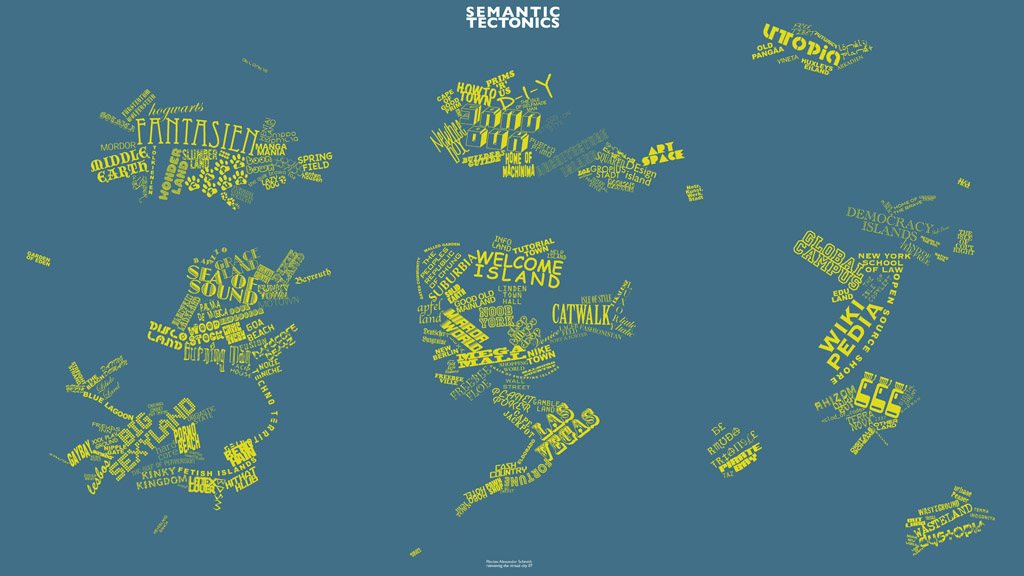
Als gedankliches Modell für die angestrebte Umstrukturierung dient die Plattentektonik, welche die Form und Lage der Kontinente auf unserem Planeten geprägt hat. SL bietet sich für dieses Raumkonzept an, da die virtuelle Welt schon jetzt zum großen Teil aus lose verstreuten, kleinen Inseln besteht, die wie Eisschollen auf dem Meer aufliegen und problemlos in das neue System integriert werden können. Die wenigen größeren Kontinente werden, wie einst der große Urkontinent Pangäa, in eine Reihe kleiner, unabhängiger Platten zerbrochen. Das Neuartige besteht darin, diese Platten nicht mehr fest an einer Stelle der Karte zu verankern, sondern sie frei über die Oberfläche der Scheibenwelt driften zu lassen. Das führt zwar dazu, dass das Koordinatensystem an Bedeutung verliert, weil sich Orte nicht mehr über absolute Zahlen ausfindig machen lassen, eine inhaltsbasierte Suchfunktion hingegen ist sehr viel leistungsfähiger. Die derzeit in SL implementierte Suche ist leider so eindimensional, dass sie nicht zu gebrauchen ist. Der ausgeklügelte Google Page-Rank hingegen zeigt, dass die Technik inzwischen deutlich differenziertere Ergebnisse liefern kann. Der Semantischen Tektonik wird ein Algorithmus zugrunde gelegt, welcher dem einer komplexen Suchmaschine ähnlich ist. Diese Formel bildet den Motor, die treibende Kraft, die die Richtung und Geschwindigkeit der Plattenverschiebungen regelt. Die beiden wichtigsten Einflussgrößen sind das Ranking, das heißt die qualitative Bewertungen einzelner Regionen, und die so genannten Tags, Schlagworte, die eine semantische Einordnung ermöglichen. Dem Prinzip der Volks-Taxonomie (Folksonomy) folgend, erhält jeder Bewohner die Möglichkeit, einzelnen Orten Werte und Begriffe zuzuweisen, die in die Berechnung des Transformationsprozesses einfließen. Die inhaltlichen Schwerpunkte der jeweiligen Parzellen werden auf diese Weise erfassbar. [Absatz im Beleg unvollständig übertragen; Rest folgt aus dem PDF]
Nach Inkraftsetzung der Semantischen Tektonik ordnen sich sukzessiv alle Landmassen in SL wie die Worte in einer Tag-Cloud um bestimmte Kernthemen an. Die neue Weltkarte enthält eine Reihe von weit auseinander liegenden, quasi magnetischen Polen, die das jeweilige Epizentrum eines Überthemas bilden. Es gibt mit Sicherheit einen Erotik-Pol, auf den mit der Zeit alle Inseln zustreben, die explizit pornographische Inhalte anbieten. Nicht allzu weit davon entfernt könnte sich der Glücksspiel-Pol befinden, um den sich nach und nach ein schwimmendes Las Vegas bildet. Zwischen diesen beiden Zentren entsteht ein Spannungsfeld, in dem bereits viele Orte des heutigen SL ein neues Zuhause finden. Forschung und Lehre beispielsweise bilden einen Kontinent am anderen Ende der Welt, umringt von einer Inselkette der einzelnen Hochschulen. Extreme Subkulturen wie die Furries könnten ihre bisher weit verstreuten Enklaven zu einem „Reich der Felltragenden“ zusammenziehen und sich völlig ungestört dem Rollenspiel hingeben.
Wichtig ist, dass die Regionen nicht von oben herab taxonomiert werden, sondern die Einwohner eines jeden Stück Lands im Kleinen ihre Entscheidungen fällen, die dann im Großen ihre Auswirkungen zeigen und ihre ordnende Kraft entfalten. Das System ist basisdemokratisch und problemlos skalierbar.
Natürlich wird diese neue Raumstrategie auch zu Konflikten führen. Ähnlich wie bei der tatsächlichen Kontinentaldrift auf der Erde, werden sich Gräben und Risse bilden, vermutlich entlang der Sollbruchstellen bisheriger Sims. Nicht jeder Bewohner wird damit einverstanden sein, wenn sein Eiland plötzlich in Richtung des Erotik-Pols abdriftet, nur weil der Nachbar eine Vorliebe für Lack und Leder hat. Umgekehrt ist es auch denkbar, dass genau dieser Nachbar der Siedlung erst die richtige Würze gibt, und man ihn um keinen Preis verlieren möchte. Es sollte deshalb jeder Grundstücksbesitzer die Möglichkeit haben, feste Bande mit seinen Nachbarn einzugehen, sodass Parzellen nicht getrennt werden können, wenn darüber ein beiderseitiges Einverständnis herrscht. Zudem steht es natürlich jedem frei, in eine Region umzuziehen, die gemäßigter ist, und damit auch heterogener. Völlig gleichförmige Nachbarschaften entstünden nur über den Zentren der thematischen Pole, also unter Menschen, die sich voll und ganz einer Sache verschrieben haben, und deshalb ohnehin gerne unter sich bleiben.
Da wir es mit einer Welt zu tun haben, deren Oberfläche zum größten Teil mit Wasser bedeckt ist, ließe sich das Konzept sinnvoll erweitern durch die Integration von Hausbooten und anderen Wasserfahrzeugen. Diese könnten, im Gegensatz zu Inseln, von ihren Bewohnern willentlich gesteuert und mit einander zu temporären Siedlungen verbunden werden. Durch das Zerbrechen und Auseinanderdriften der Hauptkontinente entstehen zusätzliche Wasserstraßen, durch die die Bewohner ihre Boote navigieren können. Sobald die Semantische Tektonik ihre Wirkung voll entfaltet hat, gibt es also im Wesentlichen drei unterschiedliche Siedlungsräume: Aus Booten bestehende, schwimmende Städte, von Kanälen durchzogene driftende Städte, die in mancher Hinsicht Ähnlichkeit mit Venedig hätten, und die großen Ballungszentren auf durchgängig solider Landmasse.
Für letztere wäre es äußerst sinnvoll, wenn Linden Lab einige Hauptverkehrsachsen anlegt, die den Raum in nachvollziehbare Areale teilen und ein Flanieren ermöglichen. Auch öffentliche Plätze für die jeweiligen Communities würden die Lebensqualität deutlich steigern und der Abwanderung und Verslumung entgegenwirken. Das so entstandene, öffentliche Wegenetz bildet eine Art zentrales Nervensystem der virtuellen Welt und ist vom Betreiber ohne Weiteres zu finanzieren, da die an den Achsen gelegenen Grundstücke zu weitaus höheren Preisen verkauft werden können, als ein Fleckchen Nichts im Nirgendwo. Die Serverarchitektur von SL bedarf ebenfalls einer grundlegenden Überholung.
Hochfrequentierten Regionen sollte zukünftig eine proportional zum Besucheraufkommen wachsende Rechenleistung zugewiesen werden. Ein solches load balancing, also eine flexible Lastenverteilung, ist dringend notwendig, damit nicht wie bisher populäre Orte wegen Überfüllung geschlossen werden müssen, sobald sich mehrere Dutzend Avatare einfinden, während anderenorts zur Berechnung von Brachland unnötig Leistung verschwendet wird. Da nach dem Prinzip der Semantischen Tektonik die einzelnen Gebiete ohnehin gewichtet werden, ließe sich nach dem selben Schlüssel auch die technische Leistung elastisch anpassen. Verlassene oder vernachlässigte Parzellen driften an die Peripherie ab, wo sie letztlich weder die Geduld der Suchenden, noch die Kapazität der Server unnötig in Anspruch nehmen.
Virtuelle Welten bieten eine wunderbare Spielwiese, nicht nur für Gedankenexperimente, sondern auch für städtebauliche Interventionen mit ganz realen sozialen Feedback-Schlaufen – denn wenn die virtuelle Stadt unattraktiv gestaltet oder schlecht strukturiert ist, wandern die Bewohner einfach ab. Zweifelsohne können wir sehr viel von diesen beschleunigten Prozessen lernen, das uns auch in der realen Welt weiter helfen kann. Umgekehrt sollten wir bei Interventionen in synthetischen Welten alle jene Freiheiten nutzen, die uns nur dort gegeben sind, und uns nicht unnötig selber einschränken, indem wir die Restriktionen der physischen Welt doppeln.